
Foster Parent Information
Your dedication and compassion make an incredible difference every day, and we are committed to keeping you informed, connected, and supported throughout your fostering journey.

Foster Parents & Providers
Please submit your W-9 now
We sincerely appreciate your ongoing service, dedication, and vital role in supporting New Mexico’s children and families. Our goal is to ensure that your payments / reimbursements / monthly maintenance payments remain stable and uninterrupted.
All foster parents and providers are required to have a completed W-9 on file with CYFD. If you have not submitted your W-9, please do not delay.
Deliver the completed W-9 to your local CYFD County Office, or mail it to:
CYFD
Attn: Jared Moore
P.O. Drawer 5160
Santa Fe, NM 87502
Thank you!
Quick links for Foster parents
Important contacts
Maintenance payments
Reimbursement information
Local partners for families
Educational resources
Foster license renewal
Events calendar
Foster parent handbook
Important contacts
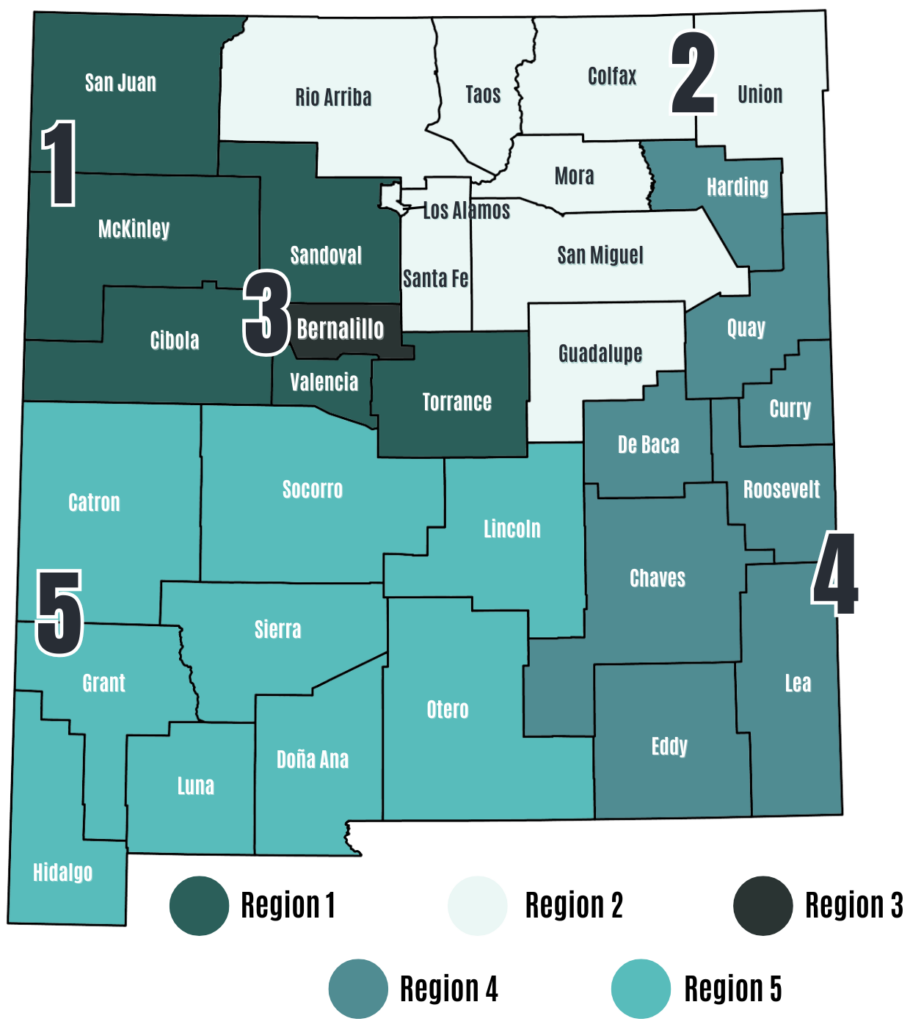
Licensing and support regional managers
Jennifer Archuleta-Earp
Marianna Bailon
Region 1 NW
Karie Griego
Region 2 NE
Michelle Valdez
Region 3 Metro
Magnus De La Rosa
Region 4 SE
Jennifer Gordon
(575) 291-5250
Region 5
Anthony Beltran
Mexico Warm Line
Speak with a New Mexico Certified Peer Support Worker. Free and confidential.
Region One
Peggy Tafoya
(505) 313-1142
Region Two
Liz Danner
(505) 366-8207
Region Three
Denis Billy
(505) 377-9828
Region Four
Tina Oglesby
(505) 313-1213
Region Five
Nicole Johnson
(505) 313-3250
Statewide
(Spanish-speaking)
Liza Maldonado
(505) 313-1213

Statewide support, education, and community connection for foster, adoptive, and kinship families!
Download the NM Fiesta Project brochure!
Foster Parent License Renewal
New Mexico foster care licenses must be renewed every two years. The process requires an updated SAFE home study, updated background checks, including abuse and neglect screenings for all adults in the home, and completion of required training hours. The Children, Youth, and Families Department (CYFD) will assist in the process.
For more information about your Foster Parent License Renewal, talk to your case worker or email FosteringSupport@cyfd.nm.gov.
Foster care maintenance rates and payments
What is a foster care maintenance payment?
Foster care maintenance is a non-taxable rate established by CYFD to provide reimbursement to licensed foster care placements for the cost of caring for children and youth in the custody of CYFD.
How are foster care maintenance rates calculated?
What expenses should maintenance payments be used for?
Maintenance rates are established to cover typical, everyday expenses that come with caring for a child, such as food, daily transportation, personal care, diapers, clothing, and entertainment.
Purchases must be made on behalf of the child or youth placed in your home. Any items (such as clothing, toiletries, books, or other personal items) purchased on behalf of the child or youth must go with that child or youth to their next placement, if applicable.
Types of foster care maintenance rates
Level 1
Level 2
Level 3
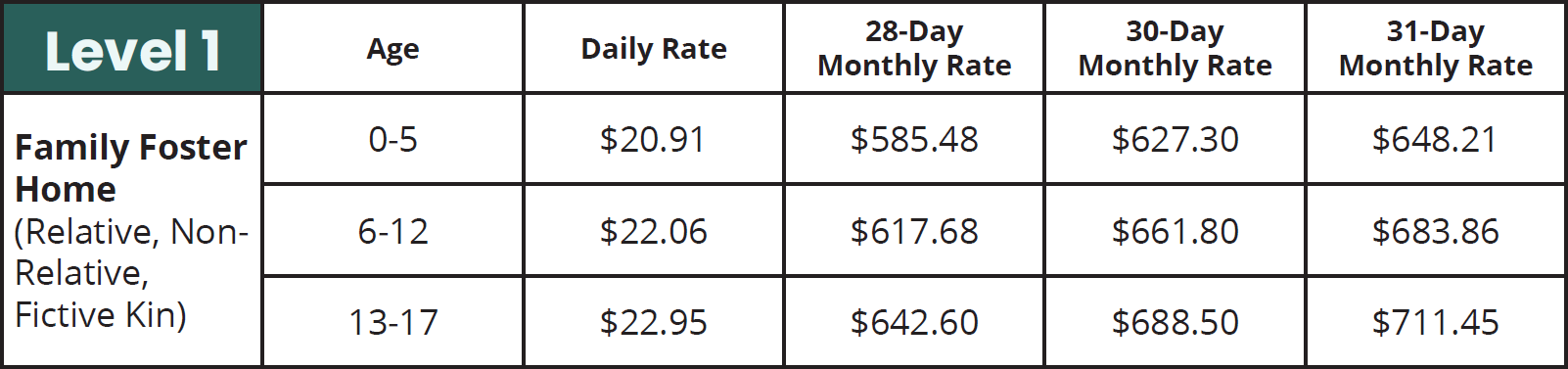
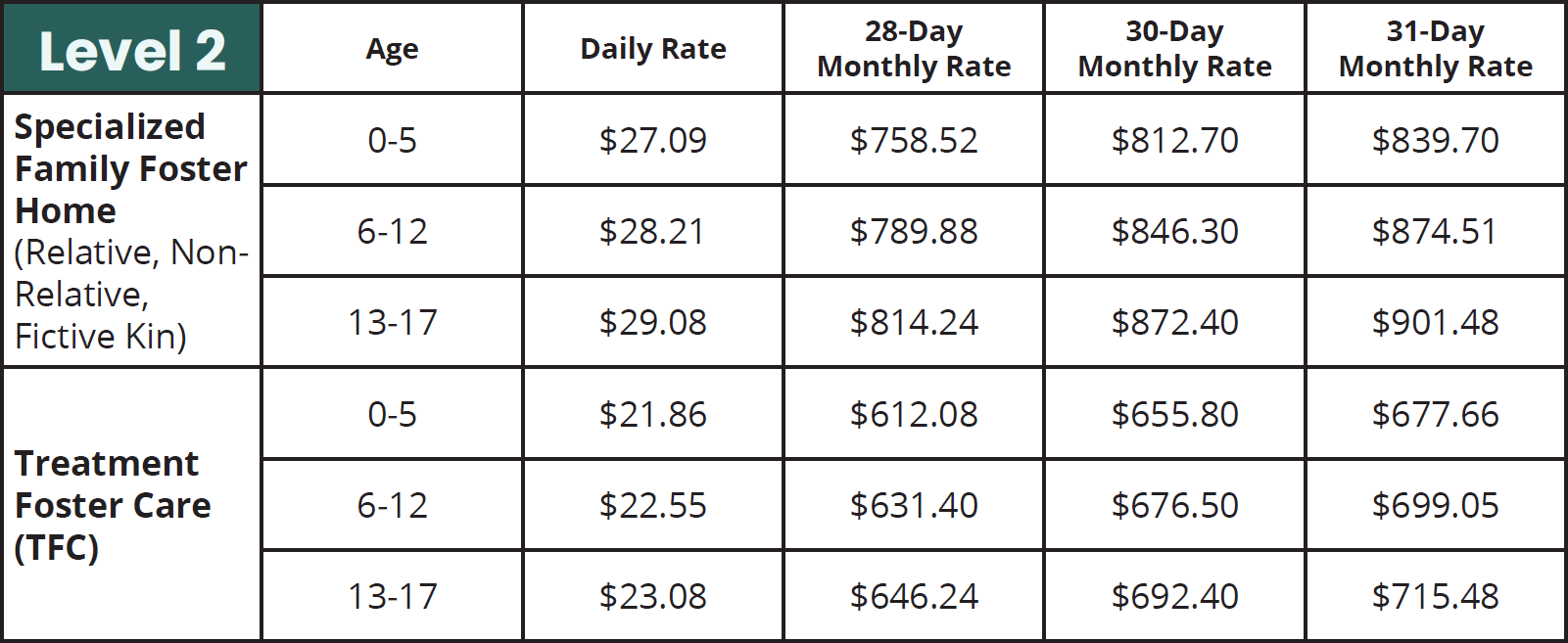
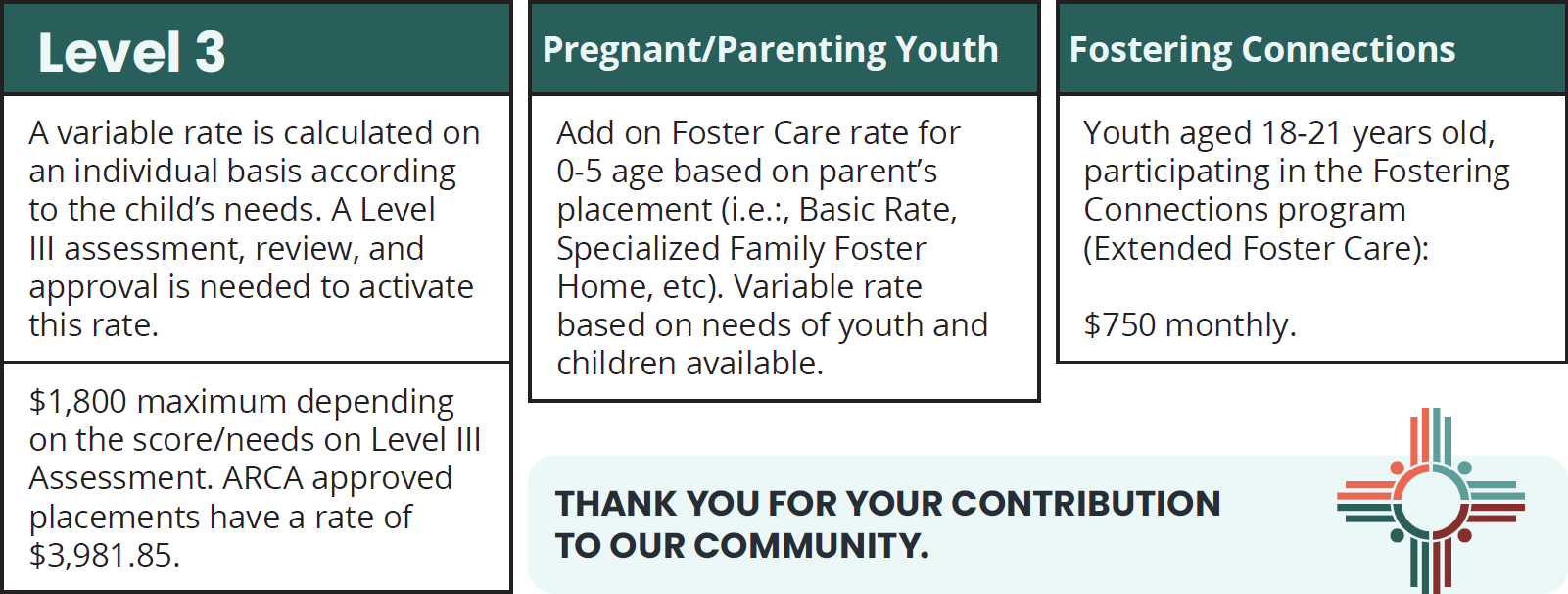
For additional Information about monthly Maintenance Payments, talk to your local caseworker, supervisor, or email Fosteringsupport@cyfd.nm.gov
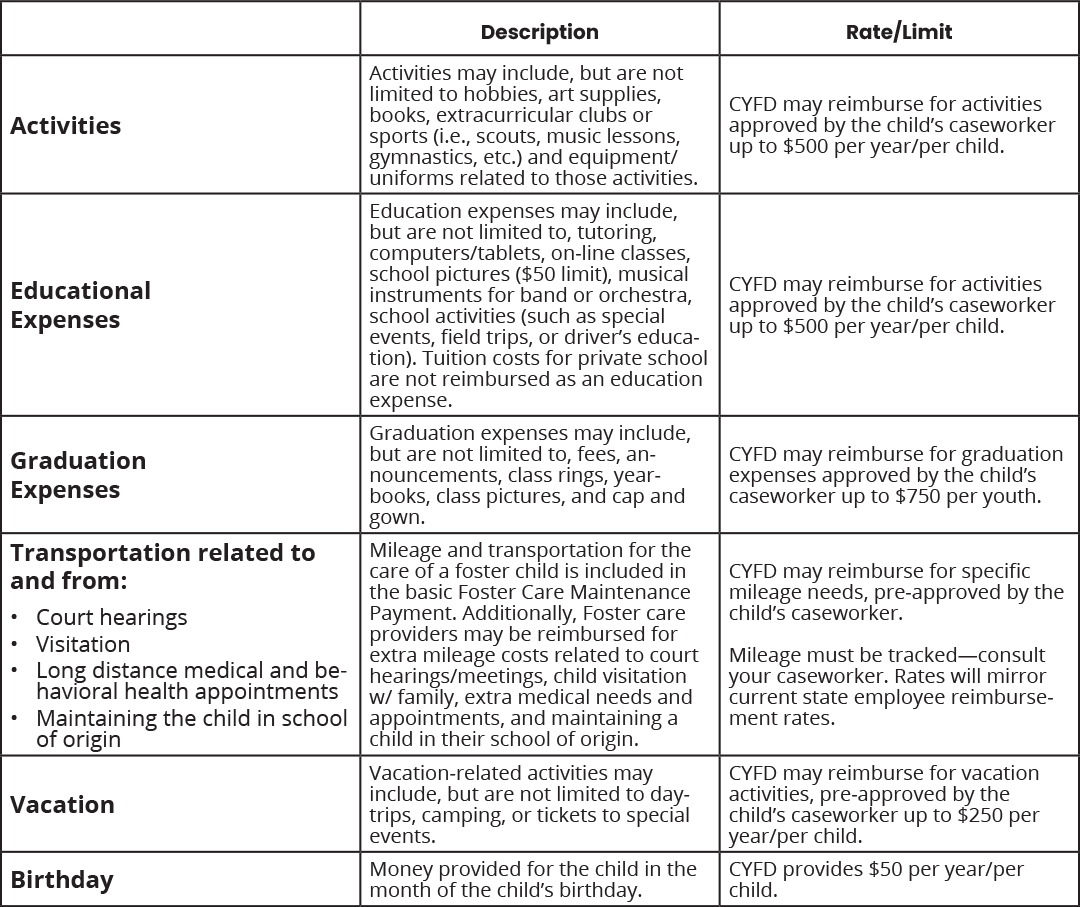
Occasional & Reasonable Personal Incidentals
Occasional and reasonable personal incidentals are items that need to be purchased for the child to support normalizing activities and participation in school activities, extracurricular activities, and events.
It also includes additional funds to support education and graduation expenses, as well as specific mileage expenses related to court hearings, visitation with family, extraordinary medical needs, and maintaining children in their school of origin.
Note: Any items purchased for the child must remain with the child if they leave the resource family’s home.
Our Community Partners


Free access to New Mexico state parks!
- Foster parents and children in CYFD or tribal custody
- Young adults enrolled in the fostering connections program
- Must be New Mexico residents, have a valid New Mexico ID, and present a placement letter or CYFD stipend stub

Education information for Children or Youth in Foster Care
Children and youth in foster care rely on a network of supportive adults to ensure their educational needs are met and their rights are protected. As foster parents, you play an important role in supporting and advocating for the educational needs of your child.
Foster parents may make the following education-related decisions, take the following types of actions, or be contacted for the following purposes:
- Ensure your child is attending school
- Ensure the child/youth is completing homework
- Attend routine school activities such as “Family Night,” parent/guardian-teacher conferences, PTA meetings, and similar activities that involve students’ families
- Approve the student’s participation in routine or non-routine school activities such as dances, field trips, and sporting events
- Determine, in conjunction with the student if appropriate, course selection and participation in extra-curricular activities
- Sign the Student Code of Conduct agreement, and, as applicable, assist the student with signing the Code of Conduct
- Receive and access education records, report cards, progress reports, transcripts, permission slips, and other routine school correspondence, including homework assignments
- Be notified of and act regarding any events that may significantly impact the student’s education, including discipline or attendance matters
- Be notified of the illness or injury of your foster child/youth
- Determine when a referral for a special education evaluation is necessary, or make a referral for an evaluation
- Determine whether the student should participate in special programs such as bilingual education, Gifted and Talented, and after-school tutoring
- Assist in transporting your foster child/youth to the school they attended at the time of placement, when necessary and reasonable. You may use school transportation. If there are transportation issues, work with your caseworker and the district’s foster care point of contact for additional support
- Share, on a regular basis, relevant educational information with your CYFD caseworker
- If you feel your child would benefit from a school change, please work with your caseworker to follow the Best Interest Determination process that is required by CYFD and School Districts
- Foster students are entitled to receive partial credit if they change schools prior to the end of a grading period
- If the child receives special education or early intervention services, you will participate with the biological parents in an Individual Education Plan (IEP) meeting to provide information about the child that would support the development of an IEP. If the biological parents are not “attempting to act as the parent” (for example, is not responding to notices or attending meetings), you are considered by law to be the child’s IDEA Parent
- There are additional funds for education-related expenses. Please reach out to your child’s case worker to discuss their availability